
Soft Innerspring Mattresses: Options and What to Expect
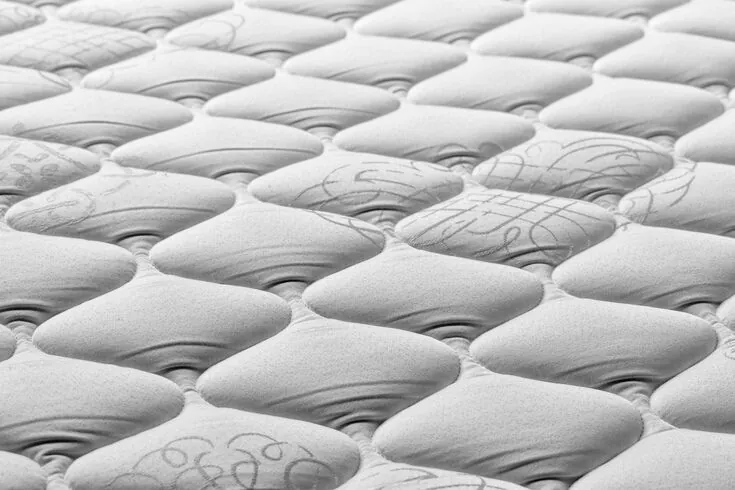
Soft innersprings put thicker pillow-top, Euro-top, or quilted foam layers over the coils. Expect more sink, more contour, and a different heat and motion feel.
Soft innersprings put thicker pillow-top, Euro-top, or quilted foam layers over the coils. Expect more sink, more contour, and a different heat and motion feel.
The 1-to-10 firmness scale is a shared feel language, not a lab standard. Medium usually lands at 5 or 6, and your body weight changes the number you feel.
A standard King is 76 by 80 inches, while a California King is 72 by 84. The Cal King is longer and narrower, so measure the room before you choose.
A Full is usually not big enough for two adults who want personal space. It measures about 54 inches wide, while a Queen is 60 and a King is 76.
Bonnell, offset, continuous, and pocketed coils each change bounce, motion transfer, and edge support. Here is what each coil type actually does.
A hybrid pairs comfort foam with pocketed coils. You get bounce, airflow, and a stronger edge than all-foam, with more cushion than a classic innerspring.
Choose a mattress size by who sleeps in it, how your room is used and what may change. See every standard size, then tape, walk and check the way in.
In a tight room, measure the wall, the walkway, and the door first. Twin, Twin XL, and Full often fit better than a Queen you have to squeeze past.
Size, type, coil quality, comfort-layer materials, edge support, and extras drive cost. Bigger sizes cost more because they use more material.